What Is PRP Therapy and How Does It Speed Up Healing?
In the world of regenerative medicine, few treatments have garnered as much attention as platelet-rich plasma (PRP) therapy. Once reserved for elite athletes recovering from sports injuries, PRP has now become a widely accessible treatment that helps everyday patients accelerate their healing and reduce chronic pain. But what exactly is PRP, and how does it work? In this article, we break down the science, the process, and the conditions it can treat.
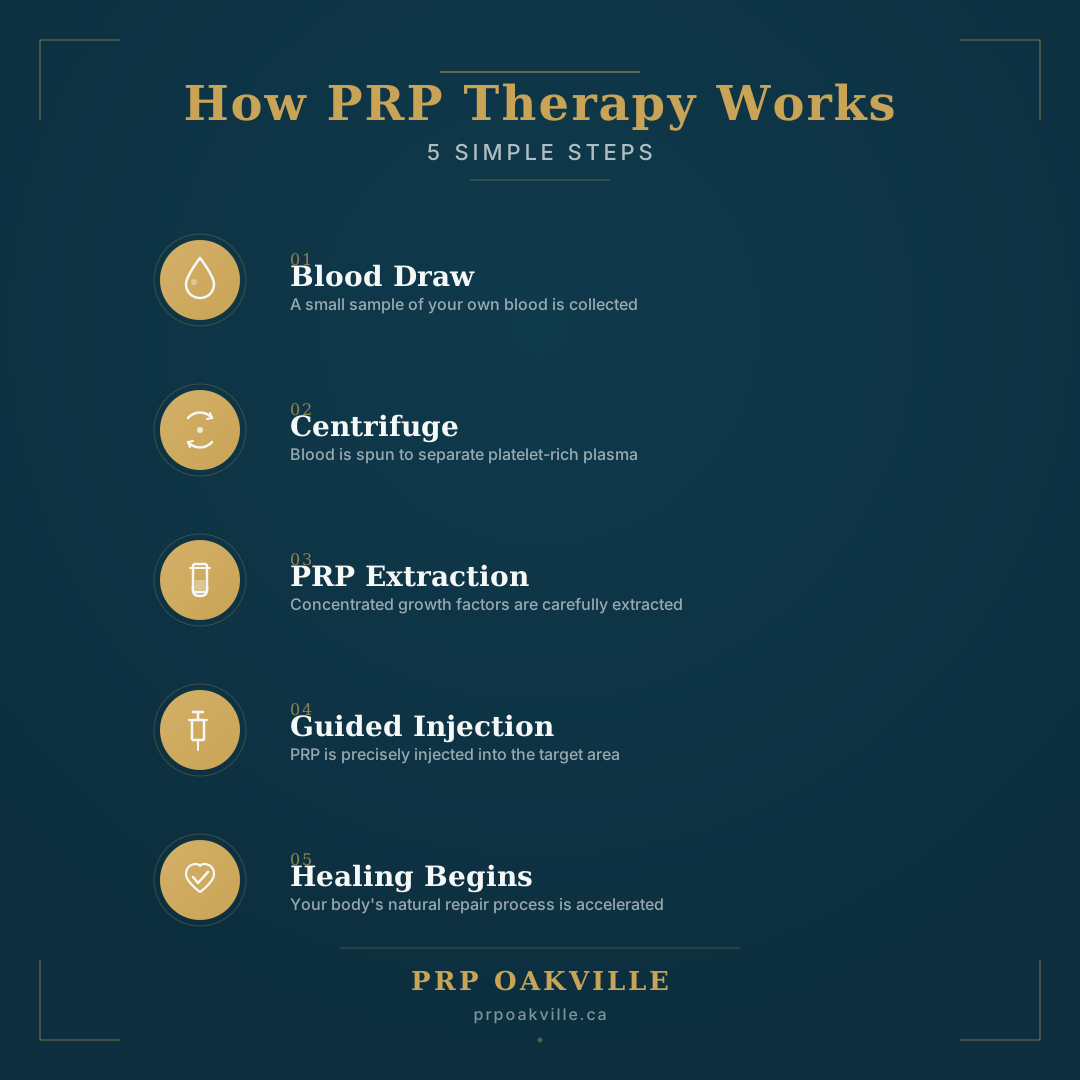
How PRP Therapy Works
PRP therapy begins with a simple blood draw, much like a routine lab test. A small sample of your blood — typically 30 to 60 millilitres — is collected from your arm and placed into a specialized centrifuge. The centrifuge spins the blood at high speed, separating it into distinct layers: red blood cells, plasma, and a concentrated layer of platelets.
This platelet-rich layer is then carefully extracted and prepared for injection. The resulting PRP solution contains three to five times the normal concentration of platelets found in your blood. Your physician then injects this concentrated preparation directly into the site of injury or damage, guided by ultrasound imaging for precision placement.
The entire process, from blood draw to injection, typically takes between 45 and 60 minutes, and it is performed in-office as an outpatient procedure. No general anesthesia is required, and most patients can return to their normal activities within a day or two.
The Science Behind Platelet Healing
Platelets are best known for their role in blood clotting, but they are far more than simple wound sealers. Each platelet contains hundreds of proteins called growth factors that are critical to the body’s natural healing process. When PRP is injected into damaged tissue, these growth factors go to work immediately, initiating a cascade of biological events that promote repair.
Among the most important growth factors released by PRP are:
- Platelet-Derived Growth Factor (PDGF) — stimulates cell replication and promotes the growth of blood vessels, which is essential for delivering nutrients to healing tissue.
- Transforming Growth Factor-Beta (TGF-β) — promotes tissue regeneration and helps regulate the inflammatory response, ensuring that healing proceeds in a controlled, productive manner.
- Vascular Endothelial Growth Factor (VEGF) — stimulates the formation of new blood vessels (angiogenesis), improving blood flow to the injured area and accelerating nutrient delivery.
- Epidermal Growth Factor (EGF) — promotes cell growth, proliferation, and differentiation, which are essential for rebuilding damaged tissue.
Together, these growth factors create a powerful biological environment that reduces inflammation, recruits stem cells to the injury site, and stimulates the production of new collagen and connective tissue. This is not a synthetic drug or a foreign substance — it is your own biology, concentrated and redirected where your body needs it most.
Conditions PRP Can Treat
PRP therapy has shown effectiveness across a wide range of musculoskeletal conditions. It is particularly beneficial for injuries that have been slow to heal with conventional treatments such as rest, physical therapy, or medication. Common conditions treated with PRP include:
- Joint injuries and osteoarthritis — particularly in the knee, hip, and shoulder, where PRP can help reduce inflammation, improve lubrication, and slow cartilage degeneration.
- Tendon injuries — including tennis elbow (lateral epicondylitis), Achilles tendonitis, and patellar tendonitis, where PRP promotes collagen production and tendon repair.
- Ligament sprains and partial tears — helping to strengthen and repair ligament fibres without the need for surgical reconstruction.
- Muscle strains — accelerating recovery from muscle tears and chronic muscle pain by promoting tissue regeneration at the cellular level.
- Plantar fasciitis — providing lasting relief for chronic heel pain that has not responded to traditional treatments.
What to Expect During Treatment
If you are considering PRP therapy, understanding the process can help set your expectations and put you at ease. Here is a step-by-step walkthrough of a typical PRP appointment:
Step 1: Consultation and Assessment. Before any treatment begins, your physician will conduct a thorough evaluation of your condition. This may include a physical examination, a review of your medical history, and imaging such as ultrasound or MRI to precisely identify the area of injury.
Step 2: Blood Draw. A small amount of blood is drawn from your arm, similar to a standard blood test. This is quick and involves minimal discomfort.
Step 3: Centrifugation. Your blood is placed in a centrifuge for approximately 10 to 15 minutes. During this time, the machine separates the platelet-rich plasma from the rest of your blood components.
Step 4: Injection. The concentrated PRP is drawn into a syringe and injected into the target area. Ultrasound guidance is often used to ensure the PRP is delivered to the exact site where it is needed most.
Step 5: Recovery. After the injection, you may experience mild soreness or swelling at the injection site. This is a normal part of the healing response. Most patients are able to resume light daily activities within 24 to 48 hours.
Is PRP Right for You?
PRP therapy is suitable for a wide range of patients, but it is not a one-size-fits-all solution. The best candidates for PRP treatment are those who have a specific musculoskeletal injury or condition that has not responded adequately to conservative treatments such as rest, physical therapy, or anti-inflammatory medications.
Patients with certain blood disorders, active infections, or those taking blood-thinning medications may need to discuss alternative options with their physician. Additionally, the severity and location of your injury will influence whether PRP alone is sufficient or whether it should be used as part of a broader treatment plan.
The best way to determine whether PRP therapy is right for you is to schedule a consultation with a qualified practitioner who can assess your condition, explain the potential benefits and risks, and help you make an informed decision about your care.
Ready to Explore PRP Therapy?
Book a consultation to find out if platelet-rich plasma treatment is the right option for your recovery.
Book a Consultation